Description
Who is Andres Bazos?
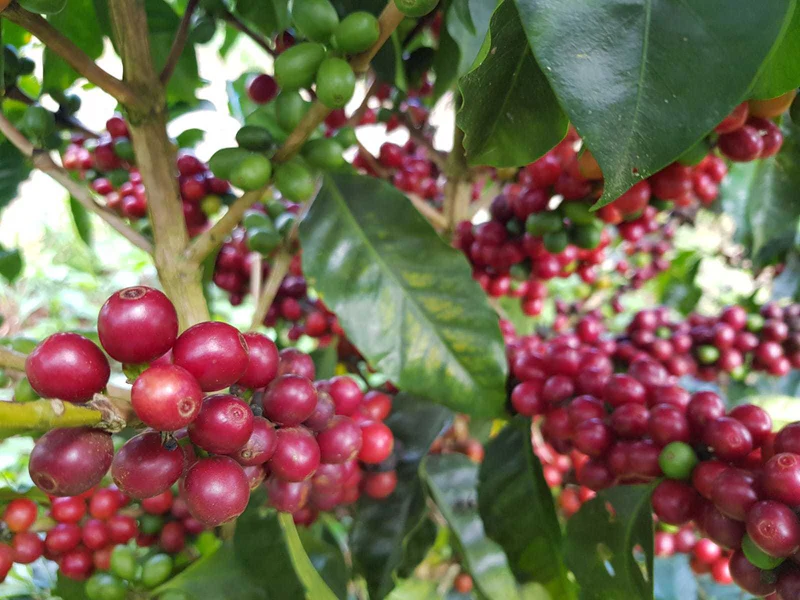
Andres is a coffee producer who inherited a farm from his great grandfather 80 years ago. His farming practices have come a long way since he took over the farm and in the last decade has invested heavily in learning more about specialty coffee and implementing best practices and techniques.
About Llave de Oro
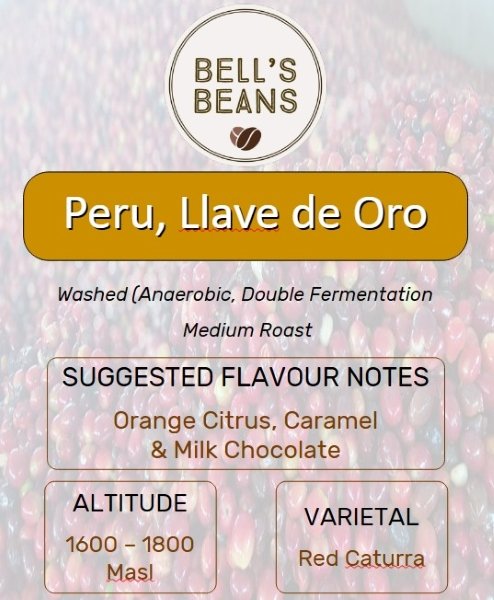
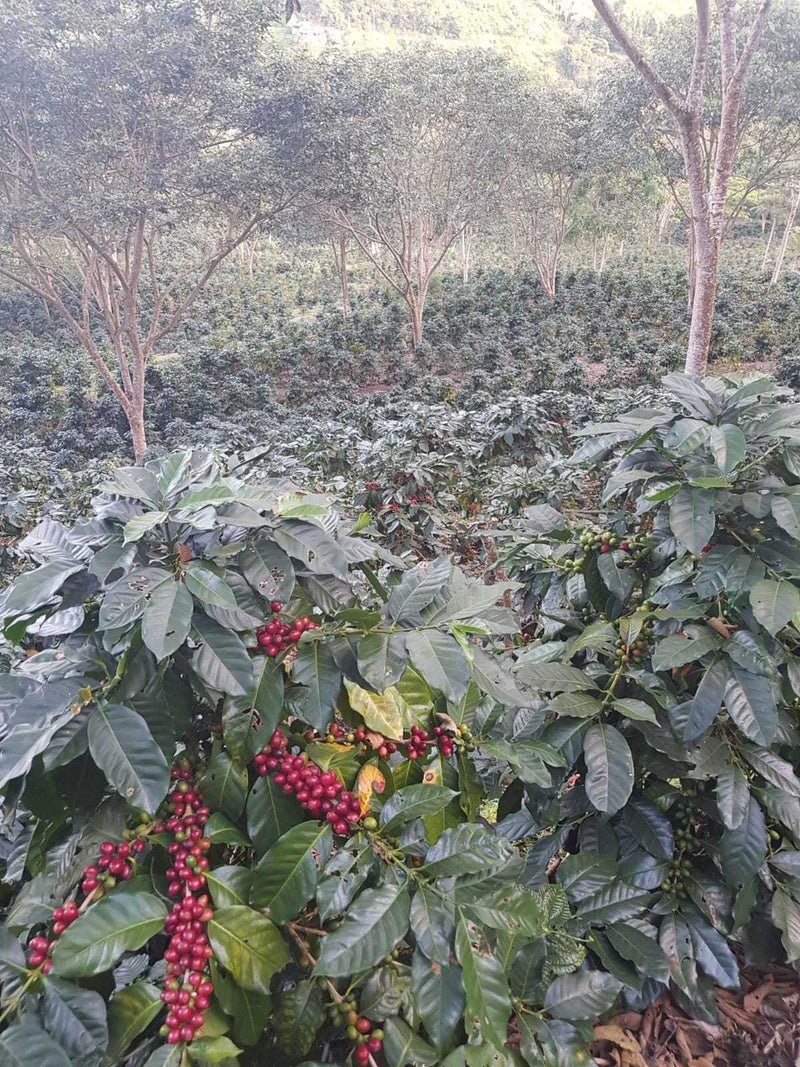
“Llave de Oro” (Gold Key) was established in 1970. The farm primarily grows Caturra, Catimor, and Bourbon varieties across 36 hectares in Sanchirio Palomar, Chanchamayo province in the region of Junin. The altitude ranges from 1600 to 1800 masl.
How was the coffee processed?
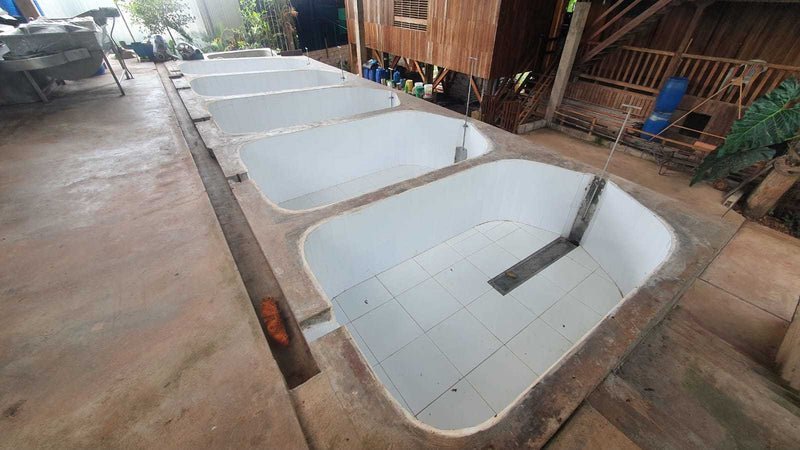
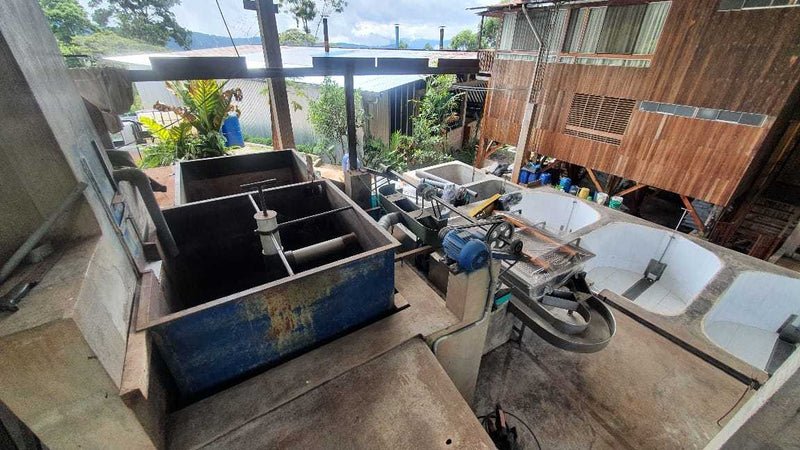
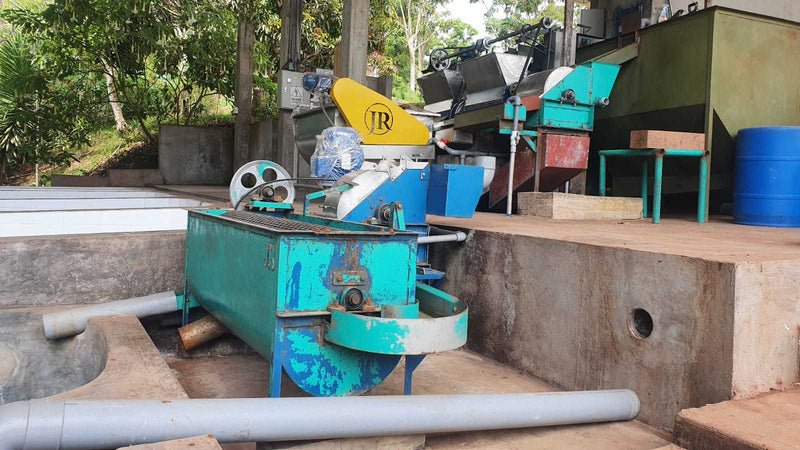
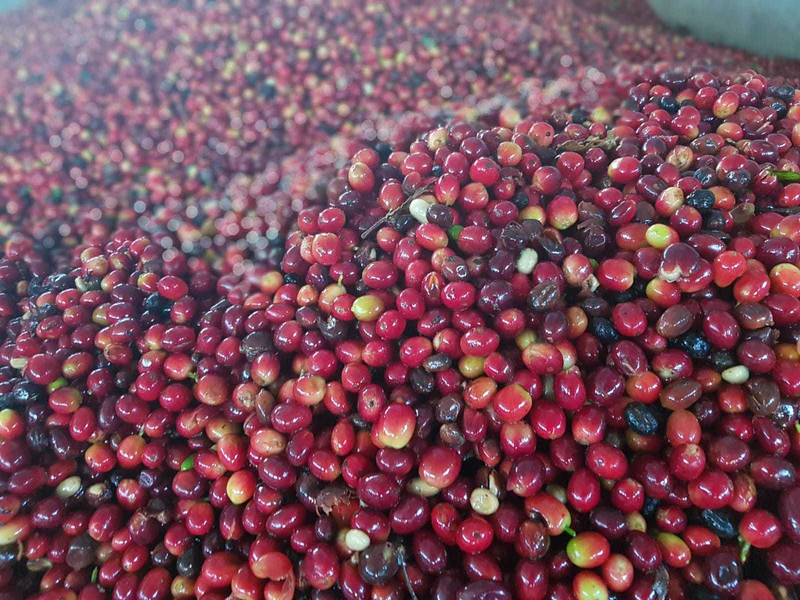
The farm has implemented strict quality control measures throughout the coffee production process. The harvest is carried out when the coffee cherries are fully ripe, with no green cherries. The processing and fermentation is done in-house using stainless steel equipment, and an anaerobic fermentation process is used. The cherries are sorted and then sealed in stainless steel tanks for 24 hours, the coffee is then pulped and fermented again for another 24 hours in ceramic tanks. For the drying they are put on raised beds in a drying room unitl 10-11% moisture.
How does Khipu Coffee know the producer?
We met Andres at the Aeropress Championship in Lima, October 2022. Initially we were introduced online when we were interviewing Peruvian coffee producers for our Instagram series, however, it wasn’t until we were in Peru that we met up with Andres. We didn’t manage to visit his farm in 2022 but we did so in 2025.
What Andres wants you to know
All fertilisers used in the coffee farm are authorized by the Rainforest Alliance standard. The farm produces 50,000 kilos of green coffee annually, and its high-quality output is the result of many years of experience, combined with guidance from many teachers and references.
The farm only produces green coffee and has a focus on continuous improvement of all its processes to maintain and increase the quality and volume of its coffee beans each year.
VARIETAL: Red Caturra
PROCESSING: Washed (Anaerobic, Double Fermentation)
ALTITUDE: 1600-1800 meters above sea level
OWNER: Andres Bazos
SUBREGION/TOWN: Palomar, Chachamayo, Junin
HARVEST MONTHS: July – September
Information and pictures kindly supplied by Mark at Khipu
How to store coffee at home
To keep your coffee as fresh as possible, you need to protect your coffee from air, sunlight, heat, and moisture. These all will contribute to making it stale and lose flavour.
We suggest keeping your coffee in an airtight container, in a cool, dry cupboard. Our bags all have a de-gassing valve, to let out CO2 that the beans produce once roasted, it’s not just there to sniff the coffee, and a reusable ziplock. So if you don’t have a fancy coffee jar just push the air out the bag, zip the lock and give the bag another squeeze to get any remaining air out.
Do not store your coffee in the fridge. Roasted coffee absorbs moisture from the air (hygroscopic) and will also take up surrounding aromas. The aromas and moisture levels in the fridge will react with the coffee and delicate flavours will deteriorate.
Need help on which grind size? Click here
News Letter
Fancy 15% off a coffee order? Then sign up to our news letter for a discount code, along with being the first to know about new coffees, special offers, tips and tricks.
Want to know more about Bell’s Beans?


Reviews
There are no reviews yet.