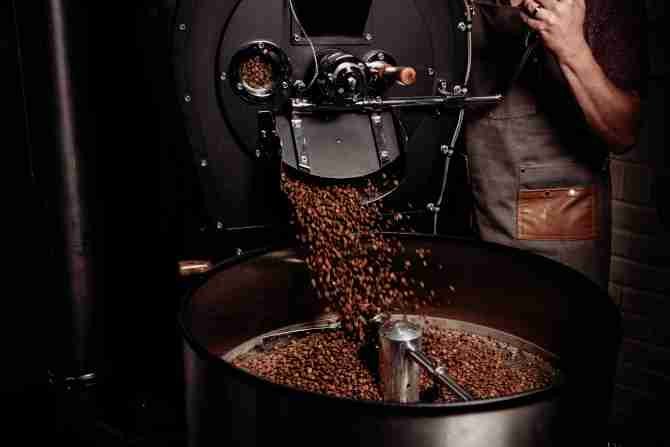
Costa Rica, Las Palomas

£5.50£39.00

A big bold medium/dark roasted Costa Rican coffee.

Giving you a deep, rich and creamy coffee with classic flavour notes of dark chocolate, Almond and Plum

Green coffee cupping score of 84


Need help on which grind size? Click here

News Letter
Fancy 15% off a coffee order? Then sign up to our news letter for a discount code, along with being the first to know about new coffees, special offers, tips and tricks.

Want to know more about Bell’s Beans?


Description

Finca Las Palomas is owned by the Monge García Family, headed by brother and sister Daniel José and María Isabel. For a long time this farm has belonged to the family, the first owner was the grandfather named Adam Monge Picado, later inherited by his son Toño Monge Picado and he handed it down to Jorge Adam Monge Garbanzo. Two of Don Jorge’s 4 children now run the farm.

Las Palomas spans six hectares and produces around 250 fanegas (a fenega is approx. 46kg) of coffee annually. The farm is named Las Palomas because of the various birds that can be found in the region, his Don Jorge employs two full-time farm workers, and a group of 25 collectors visit the farm during the harvest season, moving between Las Palomas and the neighbouring farms.

Coffee is delivered to the nearby Association of Agricultural Producers of the Communities of Acosta and Aserrí (ASOPROAAA), who process coffee and citrus in the areas of Acosta, Jorco and Palmichal, as well as offering financial, commercial and technical support to its members. They have been influential in the revival of agricultural production in the region, and are unique in their offering as a processor of traceable, quality differentiated micro lots.

Cherry for this lot is sorted before being pulped to remove the skin of the cherry and passed through the demucilager to be ‘washed’ and to remove the mucilage surrounding the bean. After washing, the lot was dried for six days on patios before being transferred to mechanical dryers for 30 to 36 hours to finish the drying process. Once the desired moisture level was reached, the coffee was packaged in poly bags for resting and sorted until the hulling process.

PRODUCER: ASOPROAAA
VARIETAL: Catuai, Caturra,
PROCESSING: Fully washed
ALTITUDE: 1,800 to 1,900 meters above sea level

Costa Rica’s Coffee Industry

Costa Rica produces exclusively Arabica coffee, with the 2023/24 harvest yielding approximately 1.25 million 60-kg bags, of which 1.02 million were exported. Robusta is not commercially cultivated. Coffee exports generated $456 million in 2023, with key destinations including the United States, Switzerland, Germany, Belgium, and Japan.

Europe recently overtook the US as Costa Rica’s top coffee market, driven by demand for premium and deforestation-free coffee.

Climate change is a major threat to Costa Rican coffee. Regions like Los Santos have seen harvests drop by as much as 20% due to erratic rainfall, fungal diseases, and soil erosion. Rising temperatures and unpredictable weather patterns disrupt flowering and fruit development, while heavy rains increase the risk of coffee rust and anthracnose. Labour shortages, exacerbated by Nicaragua’s strict border policies, have left many farms understaffed during harvest. These challenges are compounded by high production costs and a strong local currency, which reduces export competitiveness.

Costa Rica’s coffee sector is structured around smallholder farms, with 85% of producers cultivating less than five hectares. The country has pioneered micro-mill processing and environmental sustainability programs, supported by ICAFE and CATIE. Specialty coffee accounts for a growing share of exports, with producers focusing on traceability, high-altitude cultivation, and differentiated profiles. Production is concentrated in regions like Tarrazú, with larger cooperatives and estates managing bulk exports.

Information and pictures supplied by DR Wakefield


How to store coffee at home
To keep your coffee as fresh as possible, you need to protect your coffee from air, sunlight, heat, and moisture. These all will contribute to making it stale and lose flavour.

We suggest keeping your coffee in an airtight container, in a cool, dry cupboard. Our bags all have a de-gassing valve, to let out CO2 that the beans produce once roasted, it’s not just there to sniff the coffee, and a reusable ziplock. So if you don’t have a fancy coffee jar just push the air out the bag, zip the lock and give the bag another squeeze to get any remaining air out.

Do not store your coffee in the fridge. Roasted coffee absorbs moisture from the air (hygroscopic) and will also take up surrounding aromas. The aromas and moisture levels in the fridge will react with the coffee and delicate flavours will deteriorate.


Need help on which grind size? Click here

News Letter
Fancy 15% off a coffee order? Then sign up to our news letter for a discount code, along with being the first to know about new coffees, special offers, tips and tricks.

Want to know more about Bell’s Beans?


Additional information

Weight N/A

Reviews

There are no reviews yet.

Be the first to review “Costa Rica, Las Palomas”

Your email address will not be published. Required fields are marked *

go top